Why You Wake Up Tired Even After 8 Hours Of Sleep (Hidden Reasons Explained)
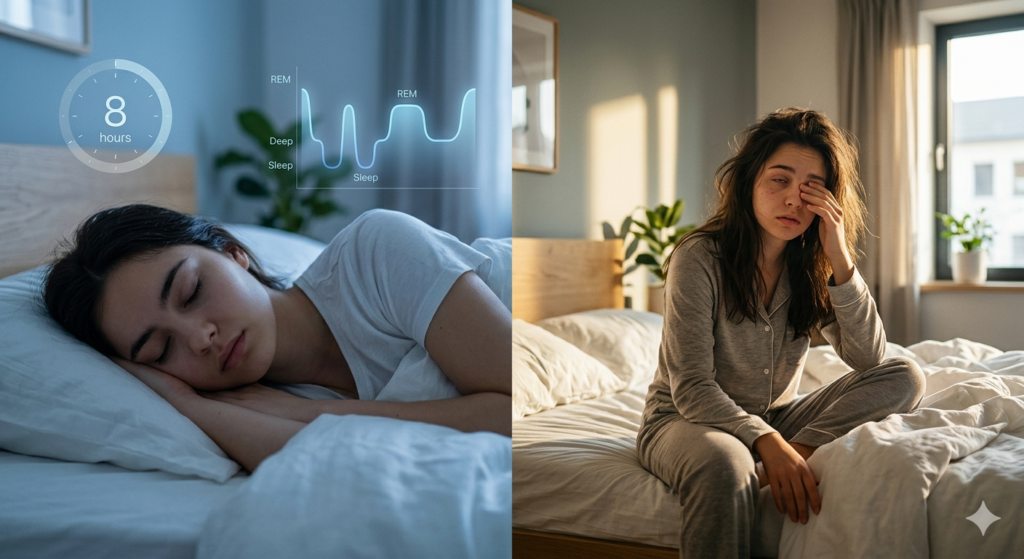
Waking up after a full night of sleep but still feeling exhausted can be confusing and frustrating. You go to bed on time, sleep for 7–8 hours, and expect to feel fresh in the morning—but instead, you feel heavy, low-energy, and unmotivated.
This is a very common problem, especially in the United States, where busy schedules, screen time, stress, and lifestyle habits often affect sleep quality more than sleep duration.
The important thing to understand is this: sleep quantity is not the same as sleep quality. Even if you sleep for 8 hours, poor-quality sleep can leave your body and brain under-rested.
In this article, we will explore the hidden reasons why you wake up tired after 8 hours of sleep and what you can do to fix it naturally.
1. Poor Sleep Quality (Most Common Reason)
You may be sleeping for 8 hours, but your sleep might be light or interrupted. Sleep has different cycles, including deep sleep and REM sleep, which are essential for restoration.
If your sleep keeps getting disturbed, your body cannot complete full recovery.
Common signs of poor sleep quality:
- Waking up multiple times at night
- Light sleep with frequent tossing and turning
- Snoring or breathing issues
- Feeling tired even after long sleep
When deep sleep is reduced, your body does not repair muscles, balance hormones, or refresh the brain properly.
This leads to morning fatigue even if you technically slept “enough.”
2. Irregular Sleep Schedule
Your body follows a natural internal clock called the circadian rhythm. This clock controls when you feel sleepy and when you feel awake.
If you sleep at different times every night, your body gets confused.
Example:
- Sleep at 10 PM one day
- Sleep at 2 AM next day
- Wake up at different times daily
This inconsistency can reduce sleep efficiency and leave you feeling tired in the morning.
Fix:
Try to sleep and wake up at the same time every day, even on weekends.
3. Stress and Anxiety
Mental stress is one of the biggest hidden reasons for waking up tired.
Even if your body is sleeping, your mind may still be active. Stress increases cortisol levels, which can interfere with deep sleep.
Effects of stress on sleep:
- Difficulty falling asleep
- Frequent waking up at night
- Restless sleep
- Morning brain fog
Many people in the US experience high stress due to work pressure, financial concerns, and screen overload.
Solution:
- Practice deep breathing before bed
- Reduce screen time at night
- Try journaling or meditation
4. Screen Time Before Bed
Using mobile phones, laptops, or watching TV before sleep can negatively affect sleep quality.
Screens emit blue light, which reduces melatonin production—the hormone responsible for sleep.
What happens:
- You fall asleep later than usual
- Sleep becomes lighter
- Brain stays active longer
Even if you sleep for 8 hours, your sleep cycle gets delayed and disrupted.
Fix:
Avoid screens at least 30–60 minutes before bedtime.
5. Poor Diet and Late Night Eating
What you eat during the day—and especially at night—affects how you feel in the morning.
Heavy, oily, or sugary food before sleep can disturb digestion and sleep quality.
Common issues:
- Acid reflux or bloating
- Blood sugar spikes and crashes
- Overactive digestion during sleep
Better choices:
- Light dinner
- Protein-rich foods
- Avoid sugar and junk food at night
A balanced diet helps your body enter deeper sleep cycles.
6. Dehydration
Even mild dehydration can cause fatigue and low energy in the morning.
During sleep, your body continues to lose water through breathing and sweating.
If you don’t drink enough water during the day, you may wake up feeling:
- Headache
- Dry mouth
- Tiredness
- Low focus
Solution:
Drink enough water throughout the day, and a small glass in the morning can help rehydrate your body.
7. Sleep Disorders (Sleep Apnea, Insomnia)
Sometimes the reason is more serious. Sleep disorders can silently reduce sleep quality.
Sleep apnea:
A condition where breathing stops briefly during sleep. It reduces oxygen levels and disrupts deep sleep.
Insomnia:
Difficulty falling or staying asleep.
Signs you should not ignore:
- Loud snoring
- Gasping during sleep
- Constant fatigue even after long sleep
- Morning headaches
If these symptoms continue, it’s important to consult a healthcare professional.
8. Lack of Physical Activity
A sedentary lifestyle can affect sleep quality. If you do not move enough during the day, your body may not feel naturally tired at night.
Effects:
- Difficulty falling into deep sleep
- Restless sleep
- Low energy in the morning
Solution:
- Walk daily
- Do light exercise
- Stay active during the day
Even 20–30 minutes of walking can improve sleep quality significantly.
9. Too Much Caffeine
Caffeine stays in your body for several hours. Drinking coffee, energy drinks, or tea late in the day can interfere with sleep.
Common problems:
- Difficulty falling asleep
- Light sleep
- Reduced deep sleep time
Even if you fall asleep, caffeine may reduce sleep quality.
Fix:
Avoid caffeine at least 6–8 hours before bedtime.
10. Vitamin Deficiencies
Low levels of certain vitamins and minerals can cause fatigue.
Common deficiencies linked to tiredness:
- Vitamin D
- Iron
- Vitamin B12
- Magnesium
These nutrients play a key role in energy production and brain function.
If you often feel tired, a medical check-up may help identify deficiencies.
11. Overthinking and Mental Fatigue
Sometimes the body sleeps, but the brain does not fully rest.
Overthinking, anxiety, or mental overload can cause:
- Restless sleep
- Emotional fatigue
- Morning brain fog
Even if you sleep 8 hours, mental fatigue can make you feel exhausted.
Solution:
- Reduce mental stimulation before bed
- Listen to calm music
- Practice mindfulness or relaxation techniques
12. Sleeping Environment Issues
Your bedroom environment plays a major role in sleep quality.
Poor sleep environment factors:
- Noise
- Bright lights
- Uncomfortable mattress
- High temperature
Ideal sleep environment:
- Dark room
- Cool temperature
- Quiet surroundings
- Comfortable bedding
Small changes in your environment can greatly improve sleep quality.
How To Wake Up Fresh Every Morning
If you want to stop feeling tired after sleep, focus on improving sleep quality, not just duration.
Simple daily habits:
- Maintain a fixed sleep schedule
- Avoid screens before bed
- Eat light dinner
- Stay hydrated
- Exercise regularly
- Manage stress
These habits help your body complete full sleep cycles and wake up refreshed.
Final Thoughts
Waking up tired after 8 hours of sleep is usually not about how long you sleep—but how well you sleep. Poor sleep quality, stress, lifestyle habits, and diet all play a major role in how refreshed you feel in the morning.
The good news is that most of these problems can be improved with small, consistent changes.
Instead of focusing only on sleeping longer, focus on sleeping better. When your sleep quality improves, your energy, focus, mood, and productivity also improve naturally.
FAQs
Why do I feel tired even after 8 hours of sleep?
Poor sleep quality, stress, screen time, and irregular sleep schedules are common reasons.
Can diet affect morning tiredness?
Yes, unhealthy or heavy meals at night can disturb sleep and cause fatigue.
How can I wake up feeling energetic?
Maintain a sleep routine, reduce stress, avoid screens before bed, and stay hydrated.
When should I worry about constant tiredness?
If fatigue continues despite good sleep habits, it may be linked to sleep disorders or nutrient deficiencies.